

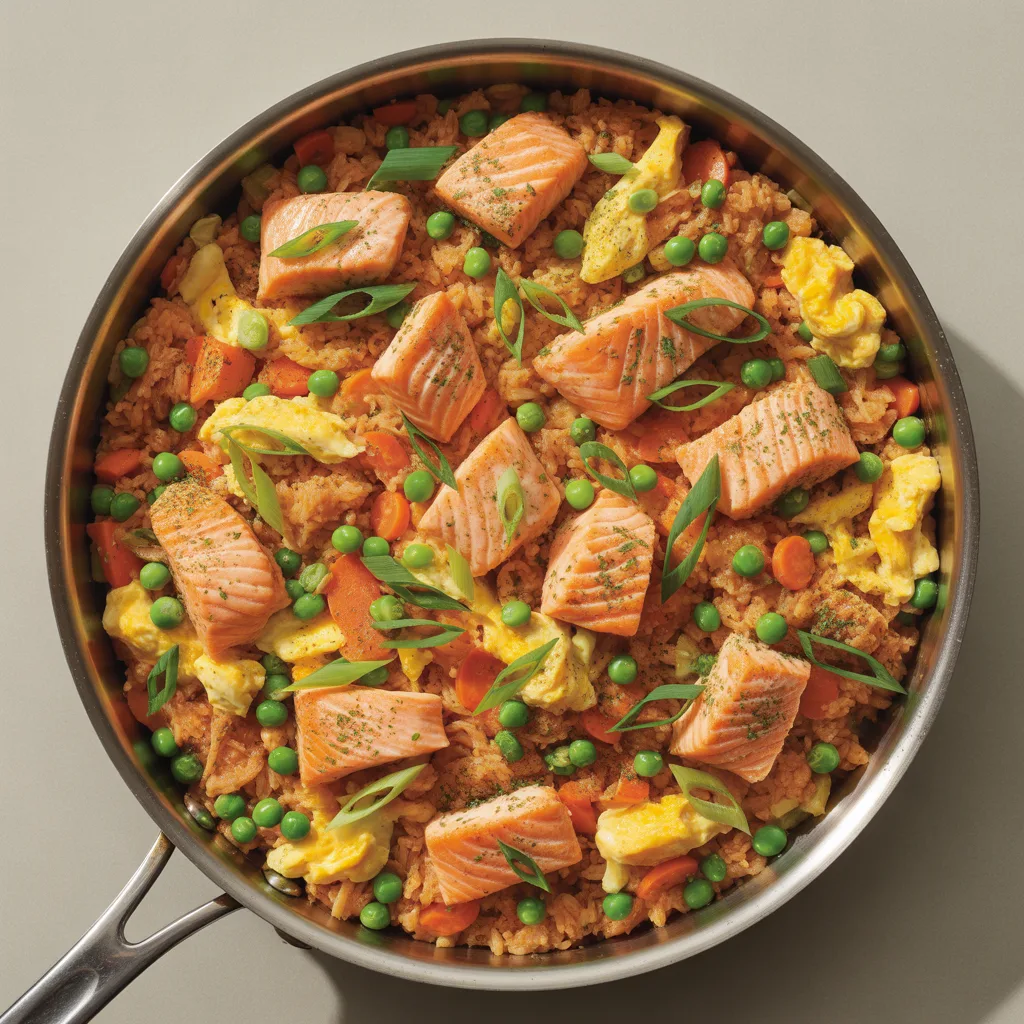
Does the thought of whipping up a delicious, satisfying dinner on a busy weeknight feel like a far-off dream? I get it. Between work, life, and everything in between, the takeout menu can start looking mighty tempting. But what if I told you that you could create a meal that’s faster, healthier, and honestly, more flavorful than anything that gets delivered? This Salmon Fried Rice is my ultimate weeknight hero. It’s the answer to the “what’s for dinner?” question that feels like a warm, comforting hug. Why settle for greasy takeout when you can have a restaurant-quality dish on your table in about 30 minutes? Seriously.
Why You’ll Love This
This isn’t just another fried rice recipe. It’s a complete meal in one pan, packed with flaky salmon, colorful veggies, and that irresistible savory-sweet glaze we all crave. I love it because it takes the concept of simple weeknight dinners and elevates it just enough to feel special without adding any fuss. It’s a brilliant way to use up leftover rice, and it’s a fantastic gateway into more adventurous salmon dishes if you’re just starting to cook with fish. Plus, it’s so, so adaptable. You can customize the vegetables based on what’s in your fridge, making it a true clean-out-the-produce-drawer lifesaver. It’s comfort with a twist, just the way I like it.
Ingredients You’ll Need
- 1 lb skinless salmon fillet, cut into 1-inch chunks: The star of our show, offering rich, satisfying protein.
- 3 tablespoons neutral oil (like avocado or canola), divided: For cooking the salmon and veggies without overpowering their flavor.
- Salt and black pepper: The essential flavor foundation.
- 3 cloves garlic, minced: For that aromatic, can’t-be-beat base note.
- 1 tablespoon freshly grated ginger: Adds a bright, zesty kick that cuts through the richness.
- 1 cup frozen peas and carrots, thawed: For a pop of color, sweetness, and easy veggie power.
- 3 cups cooked and cooled jasmine or brown rice (day-old is best!): The key to perfect, non-mushy fried rice.
- 3 large eggs, lightly beaten: Scrambled right in for extra protein and texture.
- 4 green onions, thinly sliced, white and green parts separated: For a mild onion flavor and fresh garnish.
- 3 tablespoons soy sauce (or tamari for gluten-free): Our main source of salty, umami goodness.
- 1 tablespoon toasted sesame oil: Drizzled at the end for a deep, nutty aroma.
- 1 teaspoon honey or maple syrup: A touch of sweetness to balance the saltiness.
Let’s Get Cooking Step by Step
- First, pat your salmon chunks completely dry with a paper towel. This is the secret to getting a nice sear instead of steam. Season them generously with a good pinch of salt and pepper.
- Heat a large skillet or wok over medium-high heat. Add 1 tablespoon of the neutral oil. Once the oil is shimmering, add the salmon chunks in a single layer. Let them cook for about 2-3 minutes per side, just until they’re golden brown on the outside and cooked through. You don’t need to cook them all the way through yet—they’ll finish with the rice. Remove the salmon from the skillet and set it aside on a plate.
- Reduce the heat to medium and add the remaining 2 tablespoons of oil to the same skillet. Toss in the white parts of the green onions, the garlic, and the ginger. Stir constantly for about 30 seconds until it becomes incredibly fragrant. Don’t walk away—garlic burns in a blink!
- Add the thawed peas and carrots to the skillet. Stir-fry for another 2 minutes until the vegetables are heated through.
- Push the veggie mixture to one side of the skillet. Pour the beaten eggs onto the empty side and scramble them, stirring occasionally, until they’re just set. This should take about 1-2 minutes.
- Now, add the cooled rice to the skillet. Use your spatula to break up any clumps and toss everything together—the rice, veggies, and eggs. Stir-fry for 2-3 minutes until the rice is hot.
- It’s saucing time! Pour the soy sauce and honey over the rice mixture. Toss everything together until every grain of rice is evenly coated.
- Gently fold the cooked salmon chunks back into the skillet. Drizzle everything with the toasted sesame oil and give it one final, gentle stir to combine. Taste it! This is your moment. Does it need more soy sauce? A pinch more pepper? Adjust to your liking.
- Remove the skillet from the heat. Sprinkle the reserved green onion tops over the finished dish for a fresh, colorful finish.
Serving Ideas & Pairings
This fried rice is a complete meal all by itself, but I love rounding it out with a few simple sides. A quick cucumber salad with a rice vinegar dressing is fantastic for cutting through the richness. If you’re feeling a bit more indulgent, a side of crispy store-bought potstickers or egg rolls makes it feel like a real feast. And for a different presentation, try serving it as Salmon Bowls! Just scoop the fried rice into bowls and top with extra sliced green onions, a drizzle of sriracha mayo, or even some sesame seeds. So good.
Variations & Substitutions
This recipe is a fantastic canvas for your creativity. Don’t have salmon? This method works wonderfully with other Pescatarian Recipes. Try it with cubed firm tofu, chopped shrimp (a great option for Healthy Shrimp Recipes), or even canned tuna for some quick Tuna Recipes. For the veggies, feel free to swap in chopped bell peppers, broccoli florets, or corn. If you want a bit of heat, add a teaspoon of sriracha to the sauce or toss in some red pepper flakes with the garlic. To make it gluten-free, simply use tamari instead of soy sauce. Honestly, the beauty of this dish is how forgiving it is.
Storage & Reheating
Leftovers store beautifully, making this one of my favorite Salmon Meals for meal prep. Let the fried rice cool completely, then transfer it to an airtight container. It will keep in the refrigerator for up to 3 days. To reheat, the stovetop is your best bet for restoring that just-cooked texture. Warm a little oil in a skillet over medium heat and stir-fry the leftovers until hot. You can also use the microwave, but stir it every 30 seconds to heat it evenly. I don’t recommend freezing this, as the rice can become mushy when thawed.
Doneness Test
The most important doneness test here is for the salmon. You want it to be opaque and flake easily when pressed gently with a fork. An internal temperature of 145°F is the official guideline, but I often take it off the heat just before it hits that mark, as it will continue to cook when added back to the hot rice. For the eggs, they should be fully set and not runny. And for the rice itself, you’re really just heating it through and letting it soak up the sauce.
Frequently Asked Questions
- Can I use freshly cooked rice? You can, but day-old rice that’s had time to dry out in the fridge is truly best. Freshly cooked rice has more moisture, which can lead to a mushy, clumpy fried rice. If you’re in a pinch, spread your freshly cooked rice on a baking sheet and pop it in the fridge for 20-30 minutes to cool and dry out a bit.
- What other fish can I use for this? This method is perfect for all kinds of Salmon Dishes, but it’s also great for other firm-fleshed fish. Try it with cubed cod or halibut for some simple White Fish Recipes. Just adjust the initial cook time slightly, as thinner white fish may cook faster than salmon.
- Is this recipe healthy? I’d say so! It’s packed with lean protein from the salmon and eggs, and loaded with vegetables. Using brown rice boosts the fiber, and you control the sodium by adjusting the soy sauce. It’s a much lighter and more balanced option than traditional takeout, fitting right into a collection of Healthy Salmon Recipes.
And there you have it—a incredibly delicious, incredibly simple recipe for Salmon Fried Rice Better Than Takeout that’s about to become a regular in your rotation.
