

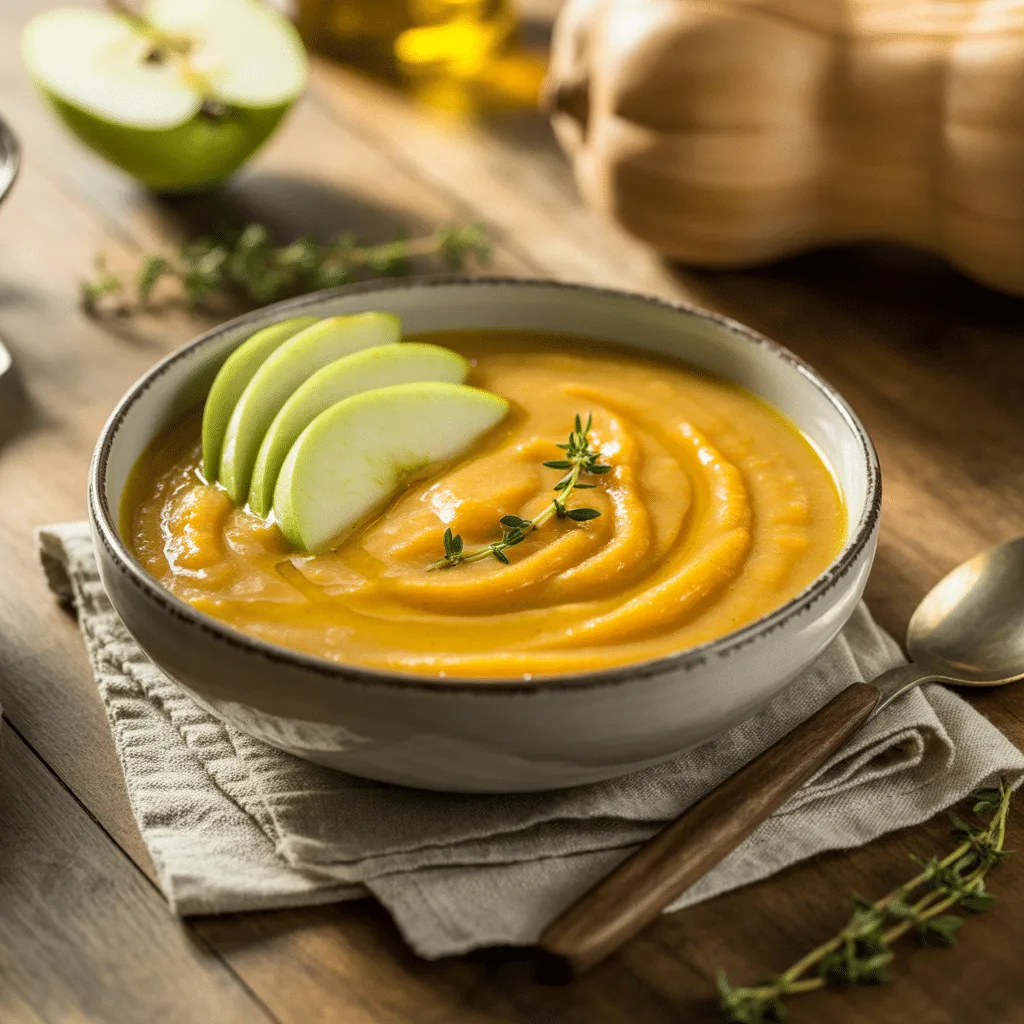
Finding the right side dish can turn a simple bowl of soup into a memorable meal. Honestly, a thick, creamy soup like this just begs for something to dip into it. My go-to is a thick, crusty slice of sourdough or a warm, whole-grain roll slathered with a little salted butter. If you’re feeling a bit more fancy, a simple salad with crisp greens, a few dried cranberries, some toasted pecans, and a light vinaigrette offers a wonderful contrast in textures and temperatures. It cuts through the soup’s richness perfectly. For a heartier fall dinner, you can’t go wrong with a simple sandwich. A grilled cheese, maybe with a bit of sharp cheddar and apple slices inside, is a classic for a reason. So good.
Variations & Substitutions
The beautiful thing about this recipe is how forgiving it is. Don’t have one thing? Swap in another. It’s all part of the kitchen fun. For a touch of smoky depth without any pork, try adding a teaspoon of smoked paprika when you’re sautéing the onions. If you want a bit more protein, stirring in a can of rinsed white beans or some shredded roast chicken at the end makes it a more filling main course. Dairy-free? Absolutely. Just swap the heavy cream for a can of full-fat coconut milk. It adds a lovely, subtle sweetness that works wonderfully with the squash and apple. And if butternut is hard to find, don’t worry. Sweet potatoes or even a large acorn squash will work just fine. This is one of those healthy comfort food recipes that welcomes your personal touch.
Perfect Serving Suggestions
How you finish your soup is just as important as how you make it. Those little toppings add texture and bursts of flavor that make each spoonful exciting. I always set out a few small bowls with different options so everyone can customize their own bowl. A drizzle of cool, plain yogurt or a dollop of sour cream is my must-have. Then, a handful of something crunchy, like toasted pumpkin seeds (pepitas) or croutons. For a sweet and savory kick, a few extra tiny diced apples or a sprinkle of crispy fried sage leaves is just divine. And don’t forget a final crack of black pepper and a pinch of flaky sea salt on top. It truly makes all the difference.
Storage & Reheating
This soup is arguably even better the next day, as the flavors have more time to get to know each other. Let the soup cool completely before you tuck it away. It will keep beautifully in an airtight container in the fridge for 4 to 5 days. To freeze it, portion it into freezer-safe containers or bags, leaving a little space for expansion, and it will be your secret weapon for a quick meal for up to 3 months. When you’re ready to eat, reheating is a breeze. Gently warm it in a saucepan over medium-low heat, stirring occasionally until it’s hot all the way through. If it has thickened up in the fridge, just whisk in a splash of vegetable broth or water until it reaches your perfect consistency. Avoid boiling it to keep that creamy texture just right.
Frequently Asked Questions
Can I make this butternut squash soup in a slow cooker? You bet! This is one of the easiest slow cooker soup recipes out there. Just sauté your onion and apple until softened, then transfer everything except the cream to your crockpot. Give it a good stir, cover, and cook on low for 6-7 hours or on high for 3-4 hours. Once the squash is completely tender, blend it smooth, then stir in the cream. My kind of easy fall dinner.
What’s the best way to peel and cut a butternut squash? They can be notoriously tough. My trick is to carefully slice a bit off the top and bottom so it sits flat on the cutting board. Then, use a sharp vegetable peeler to remove the skin. Slice it in half crosswise, scoop out the seeds, and then you can cube the thicker bottom part and slice the longer neck portion. Be careful and use a sharp knife!
Can I use pre-cut squash to save time? Absolutely. While you might pay a little more, using pre-cut fresh or even frozen cubed butternut squash is a huge time-saver for busy weeknights. It’s a fantastic shortcut that I use all the time.
